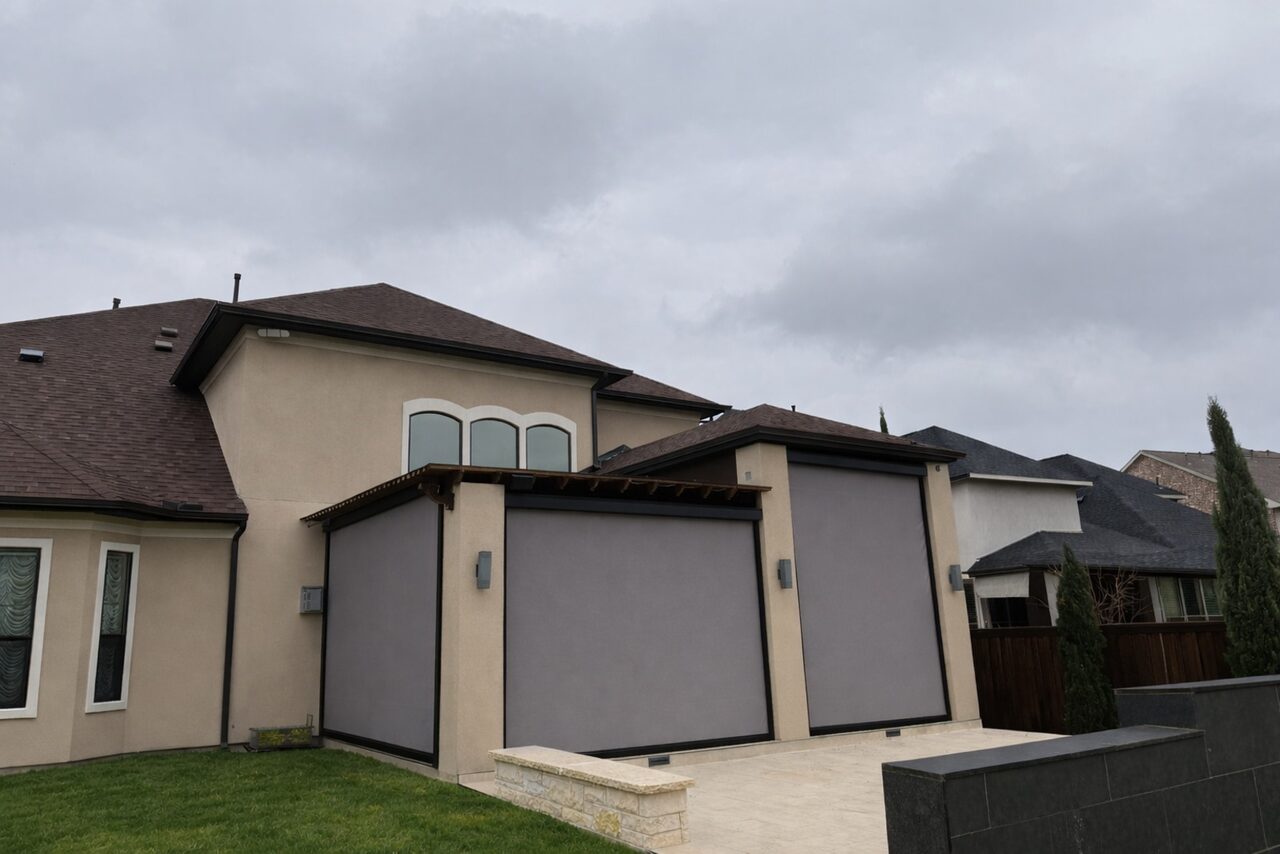
Articles · 2026-03-05
Solar Mesh Science: Openness Factors, UV, and Heat, Explained
What the numbers on a solar screen spec sheet actually mean — openness factor, UV blockage, glare, and the one-way visibility effect — so you can choose fabric with confidence.
Openness factor: the one number to understand
Every solar fabric is defined first by its openness factor — the percentage of the weave that is literally open space. A 10 percent openness fabric lets more light and air through; a 1 percent fabric approaches a solid surface. The fabrics we install run across this range, and the naming follows the blockage side of the same coin: a Solar 95 fabric blocks roughly 95 percent, a Solar 97 Nano roughly 97 percent.
Openness is a trade, not a score. Lower openness means more heat and UV stopped and more privacy, but less airflow and a dimmer view. Higher openness keeps the patio brighter and breezier but stops less of the afternoon punch. Most homeowners in our service area land in the middle-tight range — the 95 class is the most popular choice — but the right answer depends on which direction your patio faces and what you want the screen to do first.
UV, heat, and glare: reading the spec sheet
Three numbers do most of the work. UV blockage on the fabrics we install runs from 70 percent up to 97 percent — protection for skin, and equally for the furniture, rugs, and hardwood floors that fade in constant sun. Heat: shaded surfaces behind solar mesh run 15 to 25 degrees Fahrenheit cooler, and MagnaTrack's solar meshes are credited with 58 percent or better heat reduction in the shaded zone — the difference between a usable and an abandoned patio in a Mid-Atlantic July. Glare drops by roughly 70 percent, which is what makes a west-facing screen porch a place you can actually read a phone screen at 5 p.m.
Fabric color plays a quiet but real role. Darker weaves — black, charcoal, dark bronze — absorb light rather than scattering it, which paradoxically gives the best view through the screen and the best glare control. Lighter weaves reflect more heat but read brighter and give a hazier view. This is why we bring physical samples to every consultation: the same fabric behaves differently on a shaded porch in McLean than on an open deck in Stafford.
The one-way visibility effect — and its nighttime reversal
Solar mesh in daylight behaves like one-way glass. The lit side — outside — reflects and scatters light off the weave, so the screen reads as a solid surface; the shaded side — where you sit — looks through the weave toward the brighter scene beyond, so the view stays clear. Daytime privacy is a genuine, physical benefit of solar screens.
Be aware that the effect reverses after dark: when your patio lights are on and the yard is dark, the bright side is now yours, and the screen becomes more transparent from outside. If evening privacy matters, plan for it — dimmer lighting zones, or a vinyl panel option in the same track system. An honest supplier tells you this before installation, not after; it is the most common surprise in the category.
Related products
Keep reading
Motorized Screen Cost in Northern Virginia (2026): Typical Prices and the Best Systems
Typical installed costs for motorized retractable screens in 2026, what drives the price, and which system fits your patio. Your firm quote is free.
Read more
Can people see through my solar screens at night?
Daytime privacy is real, but the effect reverses after dark — what to plan if evening privacy matters.
Read more
Inside the Roller: Tubular Motors and What Somfy, Gaposa, and Dooya Each Bring
The motor in a motorized screen or awning lives inside the roller tube itself. What that means, and how the motor brands we install differ on safety features and speed.
Read more