Guides & How-To · 2026-11-13
Motorized Garage Door Screens: How They Work, Options and Costs
How motorized garage door screens work with your existing door, fabric and track options, sizing, power, privacy at night and what they typically cost.
What a motorized garage door screen is
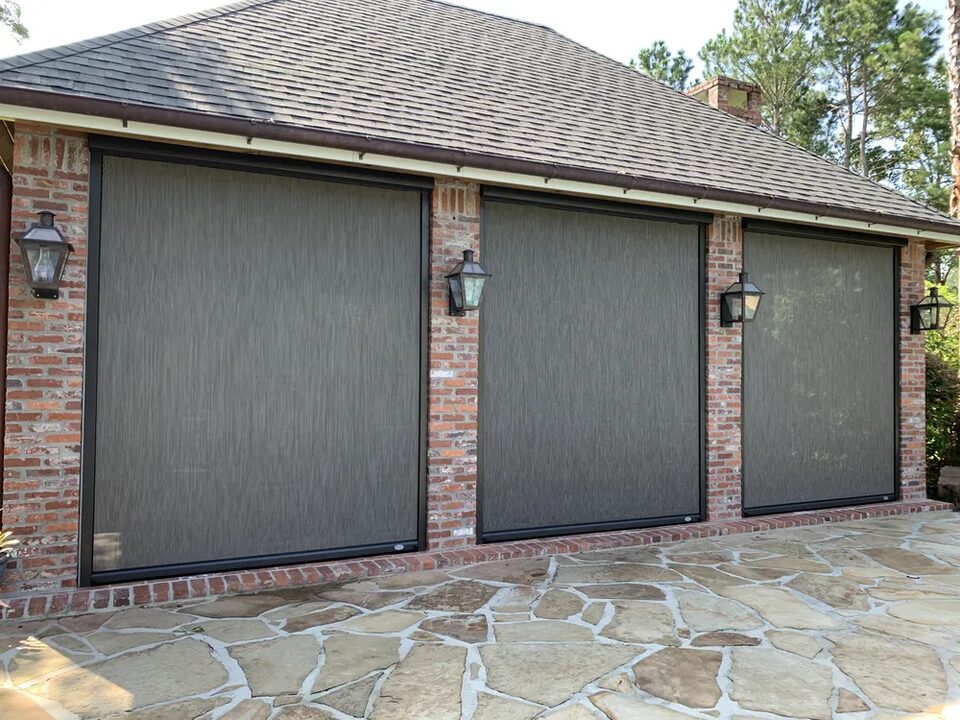
A motorized garage door screen is a retractable screen mounted inside the garage door opening. With the garage door up, you lower the screen and the garage becomes an open, screened room: air and light come in, and insects, leaves and most of the dust stay out. When you need to drive in or out, the screen rolls up into a slim housing above the opening.
It does not replace your garage door, and your door keeps working exactly as before. One of our customers put it well in her review: "this does not replace your garage door nor removes your garage door; your garage door stays."
How people use a screened garage
A screened garage opening turns one of the largest spaces in the house into usable room for more of the year:
- Home gyms and workshops that need air without bugs.
- Hobby spaces, game rooms and kids' play areas on hot afternoons.
- Overflow entertaining space next to the driveway or patio.
- A shaded, ventilated place to work on projects in summer.
The customer quoted above uses her garage for workouts and wrote that the screen "keeps out the mosquitoes, flies, bugs period." Her full review is on our reviews page.
Fabric choices for garage screens
The fabric sets how the screen behaves:
- Insect mesh gives the most airflow and view. No-see-um mesh adds protection against the smallest insects.
- Solar mesh blocks 70 to 97 percent of UV on MagnaTrack and up to 97 percent on V-Track, which cuts heat and glare in a west- or south-facing garage. It also adds daytime privacy, because from outside the screen reads as a solid panel.
- Vinyl blocks wind and rain for use in colder weather.
A note on privacy at night: like any mesh, a solar screen gives the most privacy when it is brighter outside than inside. With bright lights on inside the garage after dark, people outside can see in.
Tracks, sizes and how it fits the opening
Both systems we install fit standard single and double garage openings. MagnaTrack lists garages among its main applications, covers openings up to 30 feet wide and 20 feet tall, and handles driveway slabs up to 4 inches out of level, which is common at a garage threshold. Its magnetic tracks reseat the fabric on their own if a bicycle or a gust pushes it out. V-Track holds the fabric with a welded keder bead in an aluminum channel and offers a pet-resistant insect mesh.
At the consultation we check the header and side jambs for solid mounting, the clearance between the screen housing and the garage door's track and opener, and where power is available at the top of the opening.
Power and controls
Every motorized screen needs electrical supply at the housing. Garages usually make this easier than a patio, because there is often an outlet or circuit near the ceiling already. If not, an electrician adds one before installation day.
A handheld remote is standard. You can add a wall switch beside the door to the house, app control, smart-home integration or a wind sensor.
What motorized garage door screens cost
A garage screen is priced like any other opening. Across the market, a MagnaTrack residential screen typically costs $4,500 to $12,000 per opening installed for an opening about 12 to 16 feet wide, and a V-Track screen $2,500 to $7,000 depending on fabric. A two-car opening sits toward the wider end; each separate garage door opening is its own screen. These are market ranges, not American Light Design's prices.
See the motorized screen cost guide for what moves the price and a budget estimator.
Planning a garage screen project
A garage screen project follows the same steps as a patio screen, with a few garage-specific checks:
- Clearance. The screen housing mounts just inside the opening, so we check the space between the header and the open garage door, and the path of the door's tracks and opener.
- Mounting. The tracks fasten to the jambs on each side. We fasten into solid structure rather than trim.
- The threshold. Garage slabs often slope toward the driveway. The bottom bar has to sit evenly against that slope, which is where MagnaTrack's tolerance for floors up to 4 inches out of level helps.
- Fabric by exposure. A shaded north-facing garage may need only insect mesh, while a west-facing one benefits from solar mesh for heat and glare.
- Several doors. Each garage door opening gets its own screen, and they can be grouped so one button runs them together.
The consultation is free: we measure the opening, check clearances and power, and bring fabric samples so you can see them in your own garage light.
Care and everyday use
Garage screens see more dust than most. Rinse the fabric with a hose and mild soap a few times a year, keep the bottom of the tracks swept, and make sure the screen is fully up before the garage door closes or a car pulls in. A wall switch beside the door to the house makes that check part of the routine.
Frequently asked questions
Does a garage door screen replace my garage door?
No. The screen mounts inside the opening and rolls up out of the way. Your garage door stays and works as before.
Can I drive through a garage screen?
No. Raise the screen fully before driving in or out. It retracts in under a minute from a remote or wall switch.
Do garage screens work on double garage doors?
Yes. A MagnaTrack screen covers openings up to 30 feet wide, which includes standard double garage openings.
Can people see into the garage through the screen?
In daylight, solar mesh gives good privacy because it is brighter outside. At night with lights on inside, people outside can see in.
Screen your garage opening
We install motorized garage screens across Northern Virginia, Maryland and DC. Request a free quote or schedule a consultation, and we will measure the opening and check clearances on site.
Related products
Keep reading
Screened Porch vs Motorized Screens: Costs, Pros and Cons, and Alternatives
Fixed screened porch panels, motorized retractable screens, vinyl enclosures and awnings compared: how each works, what it suits, and what drives the cost.
Read more
Wind and Storm Ratings for Motorized Screens: What the Numbers Mean
What motorized screen wind ratings mean, certified vs internal testing, how MagnaTrack Defender storm screens are rated, and when to raise screens.
Read more
Motorized Porch Screens: Options, Costs and How to Plan Them
Motorized porch screens explained: fabrics, track systems, power, recessed installs, typical costs and how to plan a screened porch that opens up.
Read more