Guides & How-To · 2026-01-06
Motorized Awning Care Through a Virginia Winter
A season-by-season maintenance guide: the fall shutdown routine, the winter rules for snow and wind, and the spring restart checklist that keeps a 10-year awning going for twenty.
The fall shutdown: clean, dry, retract
The single most important thing you will do for your awning all year happens on one mild, dry October afternoon. Extend the awning fully and clean the fabric: brush off loose debris, rinse with a garden hose, and spot-clean any stains with mild soap and water — Sunbrella fabric tolerates gentle cleaning very well. Then the critical step: let it dry completely before retracting. Fabric rolled up damp and left for three months is how mildew happens, and it is entirely preventable.
While the awning is extended, inspect the season's wear: look over the arms and pivot points, check that mounting brackets sit tight against the wall, and note any fabric abrasion. Run the motor through a full cycle and listen for new noises. Anything questionable is far easier to service in November than to discover broken in April — our service team handles pre-winter checkups across the area.
Winter rules: snow, ice, and wind
The winter posture for every retractable awning is the same: retracted, and left retracted. Never extend an awning under snowfall or when snow or ice could shed onto it from the roof — snow load is weight the arms and fabric were never designed to carry, and an inch of wet Mid-Atlantic snow across a 16-foot awning is a genuinely heavy object. If a freak storm catches your awning extended, do not force a retraction under load; clear what you safely can and call us.
Wind is the other winter enemy, and your wireless wind sensor handles it — but only if the awning has power and the sensor has a live battery. Do not cut power to the awning circuit for the winter. Housing style also earns its price in this season: the Full-Cassette seals fabric, arms, and roller away from weather entirely, the Semi-Cassette and Cross-Arm shield the top and sides, and an Open-Roll under a good overhang rides winter out fine — its optional hood covering roughly half the roll helps where the overhang is marginal.
The spring restart checklist
First warm dry day of March or April, bring the awning back deliberately. Extend it fully and inspect the fabric — a musty smell or spotting means it went to bed damp last fall; clean it now before summer heat sets any staining. Check arms, brackets, and fasteners after a winter of freeze-thaw cycling on the wall. Cycle the motor two or three times; smooth and quiet is the standard. Reset the pitch for spring sun with the EZ-Pitch adjustment on cassette models or the crank on an Open-Roll, replace the wind sensor battery on your calendar rather than its schedule, and test a manual retract from the remote.
A seasonal rhythm like this is most of why our awnings carry a 10-year non-prorated, transferable warranty (5-year on Open-Roll) with a straight face — the hardware is built for this climate, and twenty minutes of owner care per season keeps everything inside its design envelope. If anything on the checklist fails, that is what the warranty and our local service department are for.
Related products
Keep reading
Motorized Screen Cost in Northern Virginia (2026): Typical Prices and the Best Systems
Typical installed costs for motorized retractable screens in 2026, what drives the price, and which system fits your patio. Your firm quote is free.
Read more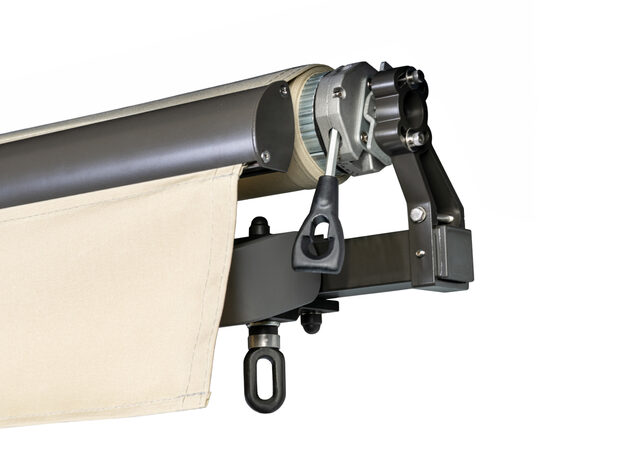
How do I adjust the pitch on an Open-Roll awning?
A manual crank sets the fabric angle — how pitch works, and when to change it through the seasons.
Read more
Where should an Open-Roll awning be installed?
Sheltered locations — under overhangs, soffits, and upper decks — and the honest rule for exposed walls.
Read more