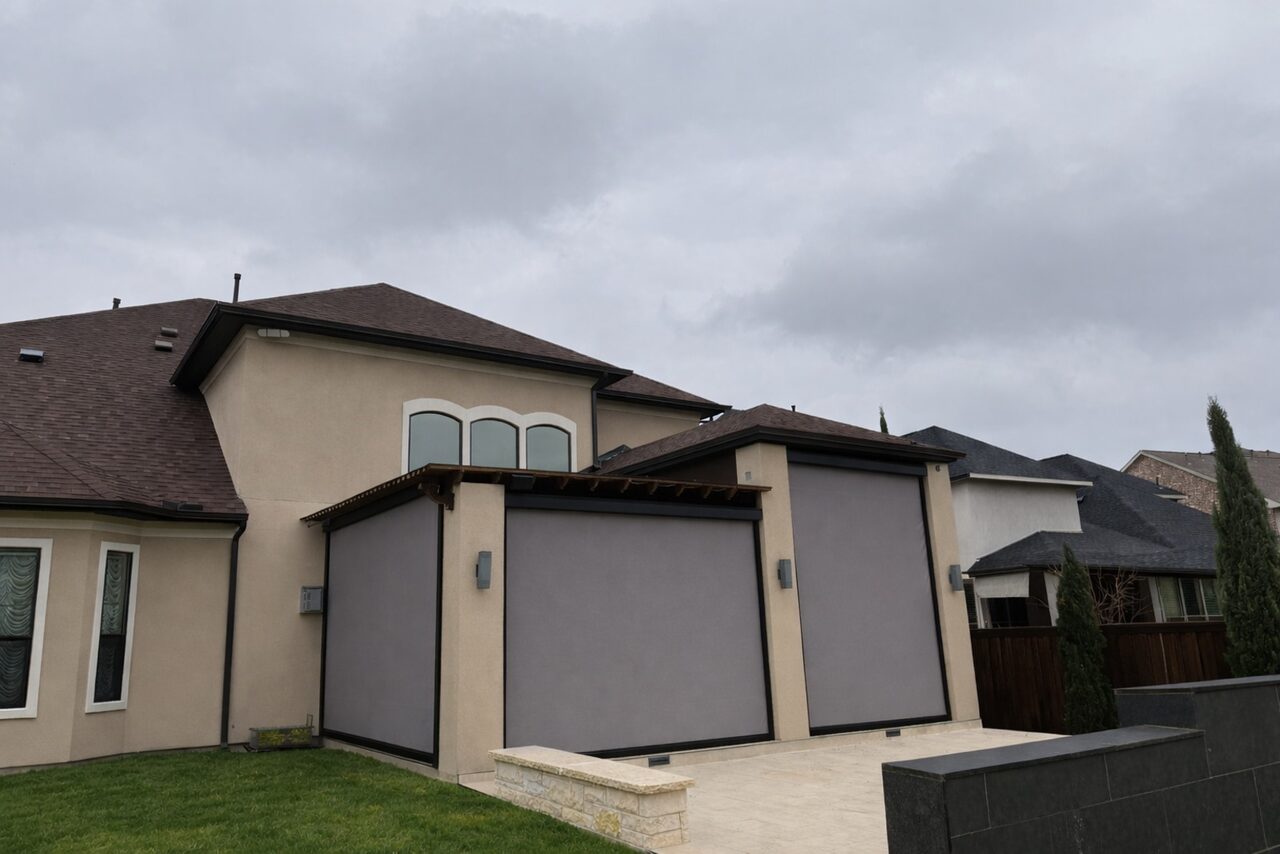
Guides & How-To · 2026-02-03
How to Choose Mesh Openness for Your Solar Screens
A three-step decision guide to openness factor — matching fabric tightness to your patio's orientation, your priorities, and the view you want to keep.
Step 1: Decide what the screen must do first
Openness factor — the percentage of a solar fabric's weave that is open area — is a trade between blocking and breathing. Before comparing numbers, rank your priorities. Is the enemy heat on a west-facing deck? Glare on a TV porch? UV fading your furniture? Or do you mostly want daytime privacy with airflow?
If insects are your first problem, note that solar mesh in the tighter classes also stops bugs — a 95 or 97 class fabric is an insect barrier as well as a sun barrier. If you want maximum airflow and only moderate shading, the more open fabrics keep the porch breezy. You cannot maximize everything at once, and the honest starting point is admitting which one you would pick if forced.
Step 2: Match openness to your exposure
Orientation does most of the deciding. West-facing spaces take low, hot, direct afternoon sun and reward the tightest weaves — the 95 to 97 class, which blocks up to 97 percent of UV and delivers the full 15-to-25-degree surface temperature drop. South-facing patios get high-angle sun that overhead structure partially handles, so a middle fabric in the 90 range often balances light and heat well. East-facing spaces get gentler morning sun and can afford more open weaves. North-facing patios rarely need solar fabric for heat at all — there, choose based on privacy, glare from reflected light, or insects.
MagnaTrack's solar range runs from Textilene Solar 80 and 90 through Solar 95, 95 Nano, and 97 Nano. V-Track fabrics from VisionTex, Twitchell, and Serge Ferrari cover the same territory in a dozen colors, with openness factors from 1 to 10 percent — and the 95 class is the most popular choice across our installs for good reason: it is the point where heat, view, and privacy all land in comfortable territory for Mid-Atlantic exposures.
Step 3: Pick color, then confirm with physical samples
Counterintuitively, darker fabrics give the clearer view. Black, charcoal, and dark bronze weaves absorb stray light instead of scattering it, so looking through them is like looking through good sunglasses — crisp, low-glare. Lighter fabrics reflect more solar energy but read hazier and brighter from inside. Most homeowners choose dark weaves for view-critical spaces and lighter tones where the screen must blend with pale trim or stucco.
Do not finalize from a website — weave and color behave differently against your actual light and landscape. We bring physical fabric samples to every consultation so you can hold them up against your own view in your own afternoon light, in Fairfax or Frederick or wherever your patio happens to face the sun. That five-minute test settles most openness debates on the spot.
Related products
Keep reading
Motorized Screen Cost in Northern Virginia (2026): Typical Prices and the Best Systems
Typical installed costs for motorized retractable screens in 2026, what drives the price, and which system fits your patio. Your firm quote is free.
Read more
Can people see through my solar screens at night?
Daytime privacy is real, but the effect reverses after dark — what to plan if evening privacy matters.
Read more
Inside the Roller: Tubular Motors and What Somfy, Gaposa, and Dooya Each Bring
The motor in a motorized screen or awning lives inside the roller tube itself. What that means, and how the motor brands we install differ on safety features and speed.
Read more