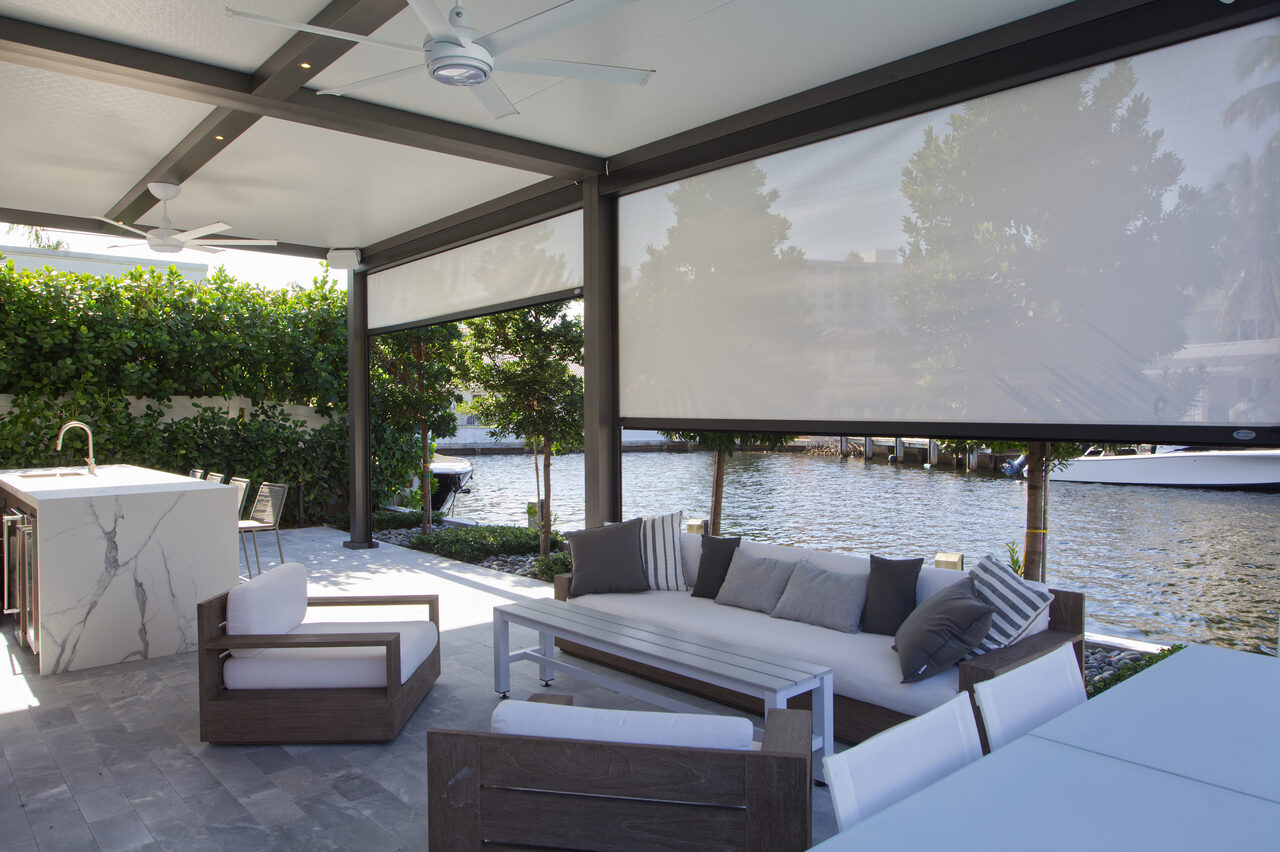
Guides & How-To · 2026-05-05
Choosing the Right Motorized Awning Style for Your Home
Open-Roll, Semi-Cassette, Cross-Arm, or Full-Cassette — a decision guide keyed to your mounting location, patio shape, and how exposed the awning will live.
Start with two questions about your wall
Before comparing styles, answer two site questions, because they eliminate options fast. First: is the mounting location sheltered? An awning mounted under a deep roof overhang, a soffit, or a second-story deck lives a protected life; one mounted on an open wall takes every ray of sun and drop of rain even while retracted. Second: what is the shape of the space you are shading? Measure the width available for mounting and the depth — the projection — you want covered.
Sheltered mounting opens the door to the Open-Roll and its lower price. Exposed mounting argues for a cassette. And if your space is deeper than it is wide, the geometry itself will pick your style for you.
Style by style: who each one fits
The Open-Roll is the value pick for protected locations — roller and fabric exposed on the wall, optional hood covering about half, sizes from 10 by 8 to 20 by 10 feet, manual crank pitch, and a 5-year non-prorated, transferable warranty. Best for sheltered patios, budget-focused projects, and decks tucked under a roofline. The Semi-Cassette is the flagship and our most-installed style: housing over the top and sides of the roll, custom widths from 9 feet 6 inches to a full 40 feet, projections to 12 feet, integrated dimmable LED arm lighting, EZ-Pitch adjustment, and the 10-year warranty. If a standard patio or deck is what you have, this is usually the answer.
The Cross-Arm exists for narrow-but-deep spaces: its crossed folding arms let an awning as narrow as 8 feet project up to 12 feet — the townhouse-deck special, and the only style that can shade more depth than its own width. The Full-Cassette fully encloses fabric, arms, and roller in a clean square housing with no valance — the pick for exposed walls, contemporary architecture, and owners optimizing for maximum hardware lifespan. Both carry the 10-year non-prorated, transferable warranty and LED arm lighting.
Fabric, color, and the options worth taking
Every style wears Sunbrella fabric — 30 in-stock patterns for fast turnaround, over 300 custom options when you want a precise match — over anti-corrosion aluminum frames in white, bronze, beige, or black. Fabric pattern is the biggest visual decision on the house, so take samples outside and look at them against your siding and trim in real daylight before committing.
Two options we recommend on nearly every order. The wireless wind sensor retracts the awning automatically when gusts pick up — the insurance policy for the fast-moving storms this region produces, and the honest answer to wind on any awning. And if evenings on the patio are the point, the dimmable LED arm lighting on the cassette styles turns the awning into the room's ceiling light. All four styles are assembled in Florida, USA, motorized with Dooya or Somfy tubular motors, and installed by our own crews across Virginia, Maryland, and DC.
Related products
Keep reading
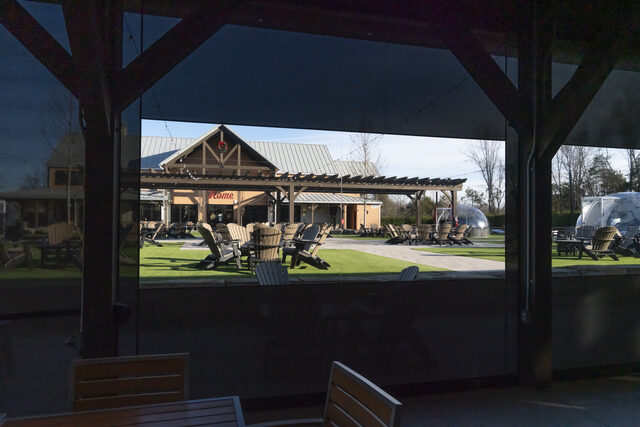
Motorized Screen Cost in Northern Virginia (2026): Typical Prices and the Best Systems
Typical installed costs for motorized retractable screens in 2026, what drives the price, and which system fits your patio. Your firm quote is free.
Read more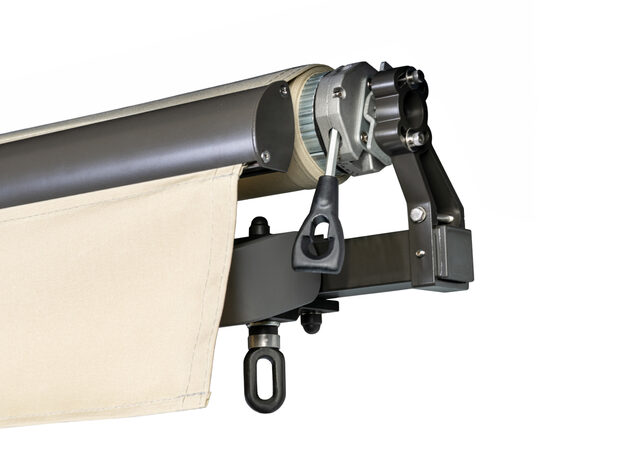
How do I adjust the pitch on an Open-Roll awning?
A manual crank sets the fabric angle — how pitch works, and when to change it through the seasons.
Read more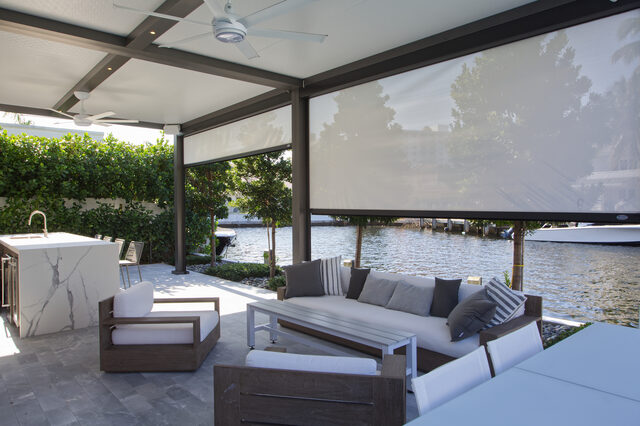
Where should an Open-Roll awning be installed?
Sheltered locations — under overhangs, soffits, and upper decks — and the honest rule for exposed walls.
Read more